by Jennifer Hart Yim | Nov 4, 2026 | Blog, Content Marketing, Logistics, Marketing, Social Media, Supply Chain
Editor’s note: This post was originally published in June 2019 and has been fully updated for supply chain marketers in 2026.
Quick answer: Social media analytics for supply chain companies should focus on four things: who your followers are (by job function and industry), engagement rate, website traffic from LinkedIn, and the contacts and deals that interact with your posts. LinkedIn page analytics, Google Analytics 4, and HubSpot’s social reports cover most of what you need.
Most supply chain companies don’t have a social media problem. They have a measurement problem.
They post on LinkedIn every week, watch the likes come in, and still can’t answer the question leadership keeps asking: is any of this turning into business? The answer is usually sitting in data they already have. They’re just looking at the wrong numbers.
Here’s what we track for our logistics, manufacturing, and supply chain technology clients, and the tools we use to track it.
Which social media metrics matter for supply chain companies?
A 3PL doesn’t need a million followers. It needs the right 2,000 people at the shippers it wants to win. That changes what “good” looks like.
- Follower quality, not follower count. Look at who follows you by job function, seniority, and industry. If your followers are mostly other logistics providers and job seekers, your content isn’t reaching buyers.
- Engagement rate. Engagement divided by impressions tells you whether a post landed, regardless of how many people saw it. Track it by post type: video, document posts, photos of your team, and links.
- Website sessions from LinkedIn. If social is doing its job, it sends people to your site. Watch which pages they land on and how long they stay.
- Contacts and deals that touch social. This is the number leadership cares about. When your CRM shows that a new contact or deal interacted with a LinkedIn post or ad, social has earned its seat in the budget.
Each tool below helps you answer one of those four questions.
The 6 social media analytics tools we use
1) LinkedIn page analytics
Start with the free tool you already have. LinkedIn’s built-in analytics show your followers and page visitors by job function, seniority, industry, and company size. That makes it the quickest way to check whether you’re reaching operations, procurement, and supply chain leaders or just your own industry.
The content tab shows impressions and engagement rate for every post. Sort by engagement rate, not impressions, to see which topics your audience actually responds to.
2) Personal profile analytics
For most supply chain companies, the biggest reach on LinkedIn comes from people, not the company page. A post from your VP of sales or your warehouse operations lead will often outperform anything the brand posts.
LinkedIn shows basic analytics on personal posts. Tools like Shield fill the gaps with history, trends, and post-by-post comparisons, so you can see which team members and topics drive the most engagement. Then have the company page repost their best content.
3) Google Analytics 4
GA4 shows what happens after someone clicks. Use the traffic acquisition report filtered to social to see which platforms send visitors, which pages they land on, and whether they convert.
Tag every link you share with UTM parameters. Without them, LinkedIn traffic often gets lumped into “direct,” and you’ll undercount what social is doing.
4) HubSpot social reports
If you use HubSpot, its social tool connects posts to contacts. You can see which posts drove sessions and new contacts, and follow those contacts through to deals. That’s the closest you’ll get to a straight line from a LinkedIn post to revenue.
It also lets you publish and schedule from the same place you manage email and lead nurturing, so your social content and your campaigns stay in sync.
5) Sprout Social or Hootsuite
If you’re managing several pages or several brands, a management platform saves hours. Both Sprout Social and Hootsuite schedule posts, pull analytics into one dashboard, and build reports you can hand to leadership. Sprout’s reports are especially clean for monthly reviews.
6) Social listening
Listening tools like Awario track mentions of your company, your competitors, and the topics your buyers talk about. For a supply chain company, that might be a carrier capacity crunch, a new tariff, or a competitor’s service failure. Those are all chances to show up with a useful point of view.
How to turn social media data into decisions
Analytics only help if they change what you do next. Once a month, look at three things:
- Which topics and formats earned the highest engagement rate
- Which posts sent the most traffic to key service pages
- Which contacts or deals touched social content
Do more of what works, cut what doesn’t, and report the results in terms leadership cares about: pipeline, not likes. The same data will also tell you how often to post on LinkedIn.
Frequently asked questions
What is the best free social media analytics tool for B2B companies?
LinkedIn page analytics and Google Analytics 4 are both free and cover most B2B needs. LinkedIn shows who you’re reaching and how posts perform. GA4 shows what those visitors do on your website.
How do supply chain companies prove social media ROI?
Connect social activity to your CRM. Tag links with UTM parameters, then use a tool like HubSpot to see which contacts and deals interacted with your posts. Report pipeline influenced by social, not likes or follower counts.
How often should you review social media analytics?
Check post performance weekly and do a full review monthly. A monthly look at engagement rate, website sessions, and influenced contacts is enough to spot trends and adjust.
Need help building a LinkedIn program that you can actually measure? See how we run social media marketing for supply chain companies, or get in touch.

by Jennifer Hart Yim | Nov 4, 2026 | Blog, Content Marketing, Marketing, Social Media
Quick answer: Most supply chain companies should post on their LinkedIn company page three to four times a week, with key team members posting one to two times a week each. Consistency matters more than volume. Start there, track the results for four to six weeks, and adjust.
Every supply chain marketer eventually asks the same question: how often should we be posting on LinkedIn?
There’s no universal number. The right frequency depends on your audience, your team, and how much you have worth saying. But there is a smart place to start, and a simple way to find what works for you.
For logistics, manufacturing, and supply chain technology companies, LinkedIn is where buyers, partners, and future hires spend their time. Here’s how we approach it with our clients.
How often should a supply chain company post on LinkedIn?
If you’re building or resetting a LinkedIn program, start here and adjust from there:
- Company page: three to four posts a week. Enough to stay visible without running out of things worth saying.
- Key team members: one to two posts a week each. Think sales leaders, operations leads, and your CEO.
- Company page reposts: share your team’s best posts from the company page, ideally the same day they go live.
Consistency matters more than volume. Three solid posts every week will do more for you than ten posts one week and none the next.
Why your people matter more than your page
We see it across our clients: original posts from real people get more reach and engagement than anything a company page publishes. A short, informal video from your warehouse floor or a quick take from your head of sales on a capacity crunch will often outperform a polished brand graphic.
So frequency isn’t just a company page question. A program where four team members each post once a week puts your company in front of far more people than a page posting daily.
Habits that hurt LinkedIn reach
Posting more won’t help if the posts are working against you. The two habits we see hurt reach the most:
- Too many hashtags. Two or three relevant ones are plenty. A wall of hashtags makes a post look like spam.
- Links in the caption. LinkedIn favors posts that keep people on LinkedIn. Put your link in the first comment and tell readers it’s there.
How to find the right posting frequency for your company
Treat frequency as something you test, not something you copy:
- Pick a starting frequency and hold it for four to six weeks.
- Track engagement rate, website sessions from LinkedIn, and new contacts.
- Change one thing, either posting more or posting less, and hold that for another four to six weeks.
- Compare the results and keep what works.
You might find that posting less, with better content, gets the same results with half the effort. Or you might find that cutting back costs you pipeline.
Frequently asked questions
Is it bad to post on LinkedIn every day?
Not if every post is worth reading. Daily posting works for companies with enough news, expertise, and team voices to keep quality high. If daily posts start feeling like filler, three or four strong posts a week will perform better.
What is the best day to post on LinkedIn for B2B?
Weekdays during business hours are a reliable starting point for B2B audiences. Your own analytics are the better guide, so check which days and times your posts earn the highest engagement rate and schedule around them.
Should employees post on LinkedIn for their company?
Yes. Posts from real people usually reach more people than company page posts. Encourage a few team members to share original posts once or twice a week, and have the company page repost the best ones.
Want help building a LinkedIn program you can measure? See how we approach LinkedIn marketing for supply chain companies, or get in touch.
by Jennifer Hart Yim | Sep 28, 2026 | Blog, Content Marketing, Logistics, Supply Chain, Transportation & Trucking
There’s no shortage of supply chain content out there. The hard part is knowing which sources are worth your time. Between tariffs, freight market swings, labor challenges, and the rush to adopt AI, the people running supply chains need sources that are timely, credible, and actually useful.
Here, we share the logistics and supply chain blogs and publications our team reads to stay on top of the industry. We’ve been publishing lists like this since 2015, and we update this one regularly so it stays current. Every source below was actively publishing when we last reviewed the list in October 2026.
Quick answer: what are the best logistics and supply chain blogs?
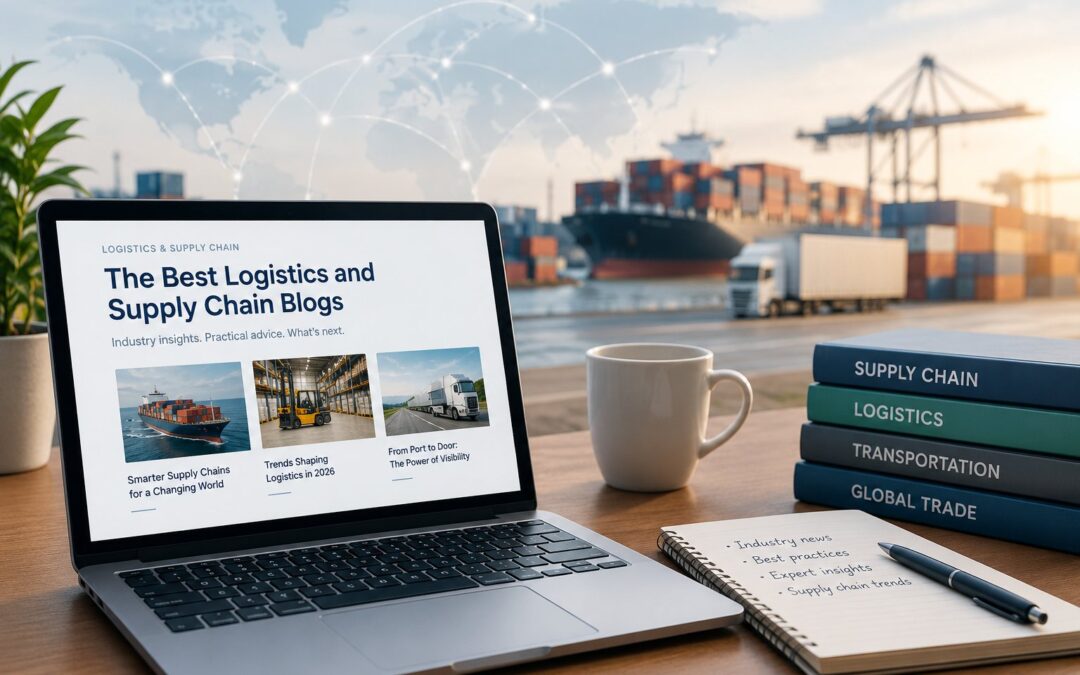
The best logistics and supply chain blogs to follow in 2026 include Supply Chain Dive, FreightWaves, Logistics Management, DC Velocity, SupplyChainBrain, Supply Chain Management Review, Supply Chain 24/7, Inbound Logistics, CSCMP’s Supply Chain Xchange, Logistics Viewpoints, Supply Chain Shaman, The Loadstar, the Women In Trucking blog, and MIT CTL news.
Best blogs for supply chain news
Published by: Industry Dive (an Informa TechTarget publication)
What it covers: Daily news briefs and analysis on logistics, operations, procurement, tariffs, and trade.
Best for: Supply chain leaders who want fast, readable news without the fluff.
Visit Supply Chain Dive →
Published by: Peerless Media
What it covers: A daily news hub covering logistics, warehousing, transportation, and technology, pulling from sister publications like Logistics Management and Supply Chain Management Review.
Best for: Anyone who wants one feed that covers a lot of ground.
Visit Supply Chain 24/7 →
Published by: Keller International Publishing
What it covers: News, contributed thought leadership, and podcasts on supply chain strategy, planning, and technology.
Best for: Supply chain managers and senior leaders who like a mix of articles and audio.
Visit SupplyChainBrain →
Best blogs for freight and transportation
Published by: FreightWaves
What it covers: Freight market news across trucking, ocean, air, rail, and brokerage, plus earnings coverage of major carriers and 3PLs.
Best for: Carriers, freight brokers, 3PLs, and anyone watching rates and capacity.
Visit FreightWaves →
Published by: Peerless Media
What it covers: News and analysis on freight transportation modes, rates, fuel prices, industrial real estate, and logistics policy.
Best for: Shippers and transportation managers.
Visit Logistics Management →
Published by: The Loadstar (UK)
What it covers: Global freight news and commentary on ocean, air, freight forwarding, and rates. Some premium content requires a subscription.
Best for: Forwarders, carriers, and international shippers.
Visit The Loadstar →
Published by: Women In Trucking Association
What it covers: News and profiles focused on women in the trucking industry, workforce trends, and recruiting.
Best for: Fleets, carriers, and HR leaders working on recruiting and retention.
Visit Women In Trucking →
Best blogs for warehousing and operations
Published by: Agile Business Media
What it covers: Warehousing and distribution center operations, transportation, logistics technology, labor, and case studies.
Best for: Logistics and operations managers running facilities.
Visit DC Velocity →
Published by: Inbound Logistics
What it covers: Practical, shipper-focused guides and columns on transportation, 3PLs, technology, and supply chain practice.
Best for: Shippers evaluating logistics partners and practices.
Visit Inbound Logistics →
Best blogs for supply chain strategy and leadership
Published by: Peerless Media
What it covers: Strategy and management content, including research and a daily briefing. Some magazine content is reserved for subscribers.
Best for: Supply chain executives and senior managers.
Visit Supply Chain Management Review →
Published by: Council of Supply Chain Management Professionals (CSCMP)
What it covers: Practitioner, thought leader, and academic perspectives on supply chain strategy, operations, workforce, and sustainability. Formerly known as Supply Chain Quarterly.
Best for: Supply chain professionals and CSCMP members.
Visit CSCMP Supply Chain Xchange →
Published by: MIT Center for Transportation & Logistics
What it covers: Research news and expert commentary from one of the leading academic supply chain centers.
Best for: Leaders who want data-driven, research-backed insight.
Visit MIT Center for Transportation & Logistics →
Best blogs for supply chain technology
Published by: ARC Advisory Group
What it covers: Analyst commentary on logistics and supply chain technology, including AI, visibility, cybersecurity, and warehouse automation.
Best for: Teams evaluating supply chain software and automation.
Visit Logistics Viewpoints →
Published by: Lora Cecere, founder of Supply Chain Insights
What it covers: Long-form, opinionated commentary on supply chain planning, enterprise software, and leadership.
Best for: Planning leaders and technology buyers who want a candid, independent view.
Visit Supply Chain Shaman →
How we chose these blogs
Our team works with supply chain, logistics, and manufacturing companies every day, and these are the sources we actually read. To make the list, a blog or publication had to meet four criteria:
- Actively publishing. Every source on this list published new content in October 2026, when we last reviewed it.
- Original insight. We looked for original reporting, analysis, or expert opinion, not just reposted press releases.
- Useful for practitioners. The content helps people who run, buy for, or sell to supply chains do their jobs better.
- Credible and independent. We favored established publications, associations, research centers, and respected analysts, and we don’t accept payment for placement on this list.
How to get more out of supply chain blogs
- Subscribe to newsletters. Most of these publications offer free daily or weekly email newsletters, which is the easiest way to keep up.
- Pick a few, not all. Choose one or two news sources and one or two specialty blogs that match your role.
- Use them for content ideas. If you market a supply chain company, these sources show what your buyers are reading and worrying about right now.
- Look for guest contribution opportunities. Many of these publications accept contributed articles from industry experts, which is a great way to build credibility and earn links back to your site.
Questions we’ve gotten about logistics and supply chain blogs
Q: What is the best free source for supply chain news?
A: Supply Chain Dive, FreightWaves, and Supply Chain 24/7 are all free to read and publish daily, which makes them strong choices for staying current on supply chain news.
Q: Which blogs are best for freight and trucking news?
A: FreightWaves and Logistics Management are two of the most widely read sources for freight market news. The Loadstar is a strong choice for global ocean and air freight.
Q: How often is this list updated?
A: We review this list regularly and remove sources that stop publishing. Every blog on this list was actively publishing as of October 2026.
Q: How can my company’s blog get featured on lists like this?
A: Publish consistently, focus on your buyers’ real questions, and share original insight instead of generic content. Contributing articles to industry publications and earning mentions from respected sources also helps your blog get noticed.
Want your blog to be one buyers read?
Fronetics works exclusively with supply chain, logistics, and manufacturing companies, and content marketing is at the heart of what we do. Learn more about our supply chain marketing services or get in touch to talk about building a blog your buyers actually want to read.

by Elizabeth Hines | Sep 18, 2026 | Blog, Content Marketing, Leadership, Logistics, Marketing, Supply Chain, Talent
Editor’s note: This post was originally published in June 2018 and has been updated for 2026 with new research and guidance for supply chain, logistics, and manufacturing companies.
Corporate social responsibility used to be a nice-to-have. A donation here, a volunteer day there, a paragraph on the About page. For supply chain companies, that’s changed. Your customers are now asking about your sustainability practices in RFPs, your future employees are checking your values before they apply, and your reputation follows you into every sales conversation.
Here, we walk you through what corporate social responsibility looks like for supply chain, logistics, and manufacturing companies, the four biggest benefits, and how to talk about your CSR efforts without sounding like everyone else.
Quick answer: what are the benefits of corporate social responsibility?
The four biggest benefits of corporate social responsibility for B2B and supply chain companies are winning and keeping customers who now screen suppliers on sustainability, attracting and retaining talent who want to work for companies that share their values, boosting employee engagement and productivity, and building a stronger brand reputation that sets you apart from competitors.
What corporate social responsibility looks like in supply chain
Corporate social responsibility (CSR) describes how a company works to have a positive impact on its people, its community, and the environment. For supply chain companies, that usually falls into a few buckets:
- Environmental: Reducing emissions across fleets and facilities, cutting packaging waste, improving energy efficiency in warehouses and plants
- Workforce: Safety programs, fair labor practices, training and career development, driver and operator well-being
- Community: Local hiring, employee volunteering, partnerships with schools and workforce programs, disaster relief logistics
- Governance: Ethical sourcing, supplier codes of conduct, transparency in reporting
You don’t need to do everything at once. The most credible CSR programs are tied to what your company actually does and where it can make a real difference.
4 benefits of corporate social responsibility
1. Win and keep more B2B customers
This is the benefit that has changed the most since we first wrote this post. Large shippers and manufacturers are under pressure to reduce emissions and risk across their own supply chains, which means they’re asking their suppliers, carriers, and logistics partners to show what they’re doing.
A 2025 Bain survey of 750 B2B companies found that 49% are already buying more from their more sustainable suppliers, and 68% plan to do so over the next three years. Even more telling: 26% are already leaving suppliers that don’t meet their sustainability criteria, and 49% expect to by 2028.
In practice, that shows up as sustainability questionnaires in RFPs, supplier scorecards, and requests for emissions data. Companies with a clear CSR story and real numbers to back it up have an edge. Companies without one risk getting screened out before price even comes up.
2. Attract and keep the people you need
Hiring is one of the biggest challenges in logistics and manufacturing, from drivers and warehouse associates to engineers and plant managers. Your values are part of what you’re offering candidates.
Deloitte’s 2026 Gen Z and Millennial Survey found that 41% of Gen Z and 39% of millennials have rejected a potential employer because its values didn’t align with their own. These generations make up a growing share of your workforce and your future leadership.
A visible, authentic CSR program gives candidates a reason to choose you, and gives employees a reason to stay.
3. Boost employee engagement and productivity
People who feel proud of where they work tend to work harder and stay longer. CSR initiatives like volunteer programs, safety commitments, and community partnerships give employees a sense of purpose beyond the daily job.
That engagement pays off. Gallup’s 2024 Q12 meta-analysis found that business units in the top quartile of employee engagement saw 23% higher profitability than those in the bottom quartile. CSR is one of many drivers of engagement, but it’s one you can control.
Engaged employees also become brand ambassadors. When your team shares your community work on LinkedIn, it reaches buyers, partners, and candidates in a way company posts can’t.
4. Build a stronger, more trusted brand
Supply chain companies often struggle to stand out. Many 3PLs, carriers, and manufacturers describe themselves in nearly identical terms. CSR gives you something specific and human to talk about.
A strong CSR story helps you:
- Differentiate from competitors who sound the same
- Build trust with buyers before the first sales call
- Earn coverage in trade publications and local media
- Give your marketing team real stories to tell on LinkedIn, your blog, and your website
Third-party mentions of your CSR work also help you show up in search. AI tools like ChatGPT and Google’s AI Overviews lean heavily on credible outside sources, so coverage of your community or sustainability efforts can support your visibility there too. Here’s more on how logistics companies get recommended by AI search.
How to talk about CSR without greenwashing
B2B buyers are skeptical, and vague claims can hurt more than they help. A few rules to follow:
- Be specific. “We cut fleet emissions 12% since 2023 by adding electric yard trucks” beats “We’re committed to a greener future.”
- Show progress, not perfection. It’s fine to say you’re early in the journey. Just be honest about where you are.
- Use real numbers. Buyers increasingly want data they can plug into their own reporting.
- Feature your people. Photos and stories from employees doing the work are more credible than polished statements.
- Make it easy to find. Create a dedicated CSR or sustainability page on your website, and mention it in proposals and RFP responses.
- Keep it current. An outdated sustainability page signals that the effort stopped.
Questions we’ve gotten about corporate social responsibility
Q: Is CSR only for large companies?
A: Not at all. Smaller supply chain companies often have more credible stories because the impact is local and personal. A regional carrier sponsoring a CDL training program or a manufacturer partnering with a local technical school can be just as compelling as a corporate sustainability report.
Q: What’s the difference between CSR and ESG?
A: CSR is a company’s overall approach to being a responsible business. ESG (environmental, social, and governance) is a framework investors and customers use to measure and compare that performance. CSR is the work; ESG is often how it gets scored.
Q: Should we include CSR in our marketing?
A: Yes, as long as it’s real. Your CSR efforts belong on your website, in your proposals, on LinkedIn, and in your recruiting materials. Just make sure claims are specific and backed by data.
Q: How do we measure the impact of CSR?
A: Track both business and program metrics: RFP win rates, customer retention, applicant volume, employee turnover, and engagement scores, alongside program outcomes like emissions reduced, volunteer hours, or community dollars invested.
Need help telling your CSR story?
Fronetics has worked exclusively with supply chain, logistics, and manufacturing companies since 2011. We help companies turn the good work they’re already doing into content that wins customers and talent. Get in touch to talk about your CSR story.
Related posts:

by Elizabeth Hines | Sep 8, 2026 | Blog, Content Marketing, Marketing, Strategy
Editor’s note: This post was originally published in October 2015 and has been updated for 2026 with new research and guidance for supply chain, logistics, and manufacturing companies.
A procurement manager needs a new LTL partner before peak season. She fills out quote forms on four carrier websites before lunch. One company calls her back in 10 minutes with a few smart questions. Another emails the next morning. The other two get back to her two days later. By then, she’s already set up a call with the first one.
That’s how most B2B deals are won or lost now. Not on price, not on capabilities, but on who shows up first when the buyer is ready to talk.
Here, we walk you through what the research says about lead response time, why it matters even more for supply chain companies, and how to set up your sales and marketing systems so you’re the one who calls first.
Quick answer: how fast should you respond to a B2B lead?
As fast as possible, ideally within minutes and no later than an hour. Research published in Harvard Business Review found that companies that contacted a lead within an hour were nearly seven times as likely to qualify it as companies that waited even an hour longer. Every hour you wait, your odds drop and a competitor’s odds go up.
What the research says about lead response time
The most cited research on this topic is still some of the best.
- Most companies are slow. In a study published in Harvard Business Review, researchers audited 2,241 U.S. companies by submitting web leads. Only 37% responded within an hour, 24% took more than 24 hours, and 23% never responded at all. Among companies that responded within 30 days, the average response time was 42 hours.
- Speed drives qualification. The same research found that firms contacting leads within an hour were nearly 7 times as likely to qualify them as firms that waited an hour longer, and more than 60 times as likely as companies that waited 24 hours or more.
- Minutes matter. An earlier MIT and InsideSales study of more than 15,000 leads found that the odds of contacting a lead were 100 times greater when the call came within 5 minutes rather than 30, and the odds of qualifying the lead were 21 times greater.
Have things improved? Not much. A 2024 RevenueHero test submitted demo requests to 1,000 B2B companies. 635 never replied, and the ones that did took an average of more than 29 hours.
That’s bad news for buyers and good news for you. If most of your competitors are slow, a fast response is one of the easiest ways to stand out.
Why speed matters even more in supply chain
Supply chain buyers often reach out when they have a real, time-sensitive need: a carrier just fell through, a new product is launching, a warehouse lease is ending, or a production line needs a new supplier. They’re not browsing. They’re solving a problem, and they’ll go with whoever helps them solve it first.
Buyers are also doing more of their research on their own before they ever talk to a rep. For carriers and 3PLs, channels like social media for logistics companies are often where that research starts. A 2025 Gartner survey found that 61% of B2B buyers prefer a rep-free buying experience overall. But when it comes to deciding whether a solution actually fits their needs, buyers still want input from sellers. When a buyer finally raises their hand with a quote request or RFQ, they’re usually far along in their process. That’s the moment that counts.
Why sales teams respond slowly
The HBR researchers found that slow responses usually come from process problems, not lazy salespeople. The same issues still show up today:
- Leads get checked in batches. Someone reviews the CRM once a day instead of getting an alert the moment a lead comes in.
- Routing rules slow things down. Leads get assigned by territory or “fairness” and sit in the queue until the right rep is available.
- Reps are focused on their own pipeline. Inbound leads feel less urgent than the deals they’re already working.
- No one owns after-hours leads. A quote request that comes in at 6 p.m. on Friday sits until Monday.
- Forms go to a general inbox. Leads land in an info@ address that no one monitors closely.
How to respond to leads faster
The fix is usually a mix of process and automation. Here’s where to start:
- Send instant alerts. Push new lead notifications to reps by email, text, or Slack the moment a form is submitted.
- Route leads automatically. Use round-robin or rules-based routing in your CRM so every lead has an owner right away. In HubSpot, workflows and lead rotation make this simple.
- Let buyers book time themselves. Add a meeting scheduler to your thank-you page so high-intent buyers can book a call immediately.
- Send a useful auto-reply. Confirm you got the request, tell buyers when they’ll hear from you, and give them a direct phone number.
- Use chat on high-intent pages. Live chat or a chatbot on quote and contact pages can answer basic questions and capture details right away.
- Cover after-hours leads. Decide who responds to evening and weekend leads, or set expectations clearly in your auto-reply.
- Measure response time. Track average time to first contact by rep and by lead source, and make it part of your sales team’s regular review.
- Make your forms work harder. Ask for the details your team needs to respond well, like mode, lanes, volume, or timeline, without making the form so long that buyers give up.
Lead response checklist for supply chain companies
| Area |
What good looks like |
| Alerts |
Reps are notified within seconds of every new lead |
| Routing |
Every lead is automatically assigned to an owner |
| Response goal |
First contact within minutes, and never more than an hour during business hours |
| Scheduling |
Buyers can book a call directly from the form or thank-you page |
| After hours |
A clear plan for evening and weekend leads |
| Follow-up |
Multiple attempts across phone and email before a lead is closed out |
| Reporting |
Response time tracked by rep and lead source |
Questions we’ve gotten about lead response time
Q: What is a good lead response time for B2B companies?
A: Aim for minutes, not hours. Responding within five minutes is ideal, and within an hour should be the minimum during business hours. Most companies are much slower, so even an hour can put you ahead of competitors.
Q: Does an automated email count as a response?
A: It helps, but it isn’t enough on its own. An automated confirmation reassures the buyer, but a real person reaching out quickly is what moves the deal forward.
Q: How many times should sales follow up with a new lead?
A: More than most teams do. Many leads aren’t reached on the first attempt, so plan for several attempts across phone and email over the first week before closing a lead out.
Q: How can marketing help improve lead response time?
A: Marketing can set up instant alerts, lead routing, meeting schedulers, chat, and reporting in your CRM. Marketing and sales should also agree on what counts as a qualified lead and how fast each type of lead should get a response.
Want to turn more leads into customers?
Fronetics works exclusively with supply chain, logistics, and manufacturing companies, and we help clients connect marketing and sales in HubSpot so no lead goes cold. Get in touch and we’ll help you find where leads are slipping through the cracks.

by Elizabeth Hines | Aug 12, 2026 | Blog, Content Marketing, Marketing, Social Media, Strategy
Editor’s note: This post was originally published in July 2016 and has been updated for 2026 with new research on how B2B buyers use social media, peer reviews, and AI to research vendors.
When we first wrote this post, the big news was that B2B buyers had started using social media to research vendors. That’s no longer news. Today’s buyers move between LinkedIn, YouTube, peer reviews, industry communities, and AI tools like ChatGPT before they ever talk to a salesperson. And by the time they do reach out, most have already decided who they like.
Here, we walk you through what the latest research says about how B2B buyers research vendors, which channels matter most, and what supply chain, logistics, and manufacturing companies should do about it.
Quick answer: do B2B buyers use social media to research vendors?
Yes. Social media is one of several channels B2B buyers use to research vendors, alongside peer reviews, word of mouth, and increasingly AI tools. LinkedIn’s research found that nearly two-thirds of B2B buyers say social video helps shape their buying decisions. Buyers also do most of their research on their own, so your social presence is often how they first judge whether you’re credible.
Buyers do most of their research before they talk to you
The biggest shift in B2B buying is how much happens without you. In the 6sense 2025 B2B Buyer Experience Report, which surveyed nearly 4,000 buyers:
- Buyers made first contact with sellers about 61% of the way through their buying journey.
- Buyers, not sellers, initiated 79% of engagements.
- 94% of buyers had already ranked their shortlist by preference before engaging sellers.
- The vendor that won the selection phase went on to win the deal 77% of the time.
In other words, buyers are forming opinions about your company long before your sales team gets a chance to make its case. Social media, your website, reviews, and AI answers are doing that selling for you, whether you’re managing them or not.
How B2B buyers use social media today
LinkedIn is still the center of B2B social
For supply chain companies, LinkedIn is where buyers, partners, and future employees are most likely to see you. Buyers use it to check out your company page, see what your leaders are posting, find out who they know at your company, and get a feel for your expertise. A quiet or outdated LinkedIn presence sends a signal, and it’s not a good one.
Video is shaping buying decisions
Video has become one of the most influential formats in B2B. According to the LinkedIn B2B Institute, nearly two-thirds of B2B buyers say social video helps shape their buying decisions. The same research found that vendors known across the whole buying group from the start are 20 times more likely to be bought than those known only through an expert recommendation.
For supply chain companies, video is a natural fit: facility tours, equipment demos, customer stories, and short explainers from your own experts all help buyers see what working with you would actually be like.
Peers and reviews still carry weight
B2B buyers trust other buyers. TrustRadius’s 2026 B2B Buying Disconnect report found that most buyers consult customer reviews during their purchase journey and more than half speak with a peer along the way. Industry groups, LinkedIn conversations, and word of mouth from people buyers already trust remain some of the strongest influences on a shortlist.
AI is now part of the research process, too
The newest research channel is AI. Forrester reports that 94% of business buyers now use AI in their buying process. And in G2’s 2026 research, 51% of B2B software buyers said they start their research with an AI chatbot more often than with Google, up from 29% a year earlier.
That matters for social media, too. AI tools pull from what’s published about you across the web, including your LinkedIn presence, reviews, and mentions in industry publications. A consistent, active presence makes it easier for AI tools to understand and recommend your company. Here’s more on how logistics companies get recommended by ChatGPT and AI search.
What buyers expect when they find you
Whether a buyer finds you on LinkedIn, through a peer, or in an AI answer, they’re looking for the same things:
- Proof you understand their world. Content that speaks to their specific industry, challenges, and terminology.
- Real expertise. Insight from people at your company, not just promotional posts.
- Evidence. Case studies, customer stories, and specifics that back up your claims.
- Consistency. The same story on your website, LinkedIn, review sites, and sales conversations.
- A fast response. When they finally reach out, they expect to hear back quickly. Here’s why lead response time matters so much.
How supply chain companies can show up where buyers research
- Keep your LinkedIn company page current. Update your description, services, locations, and featured content so it matches your website. For logistics-specific guidance, see how to use social media in transportation and logistics.
- Get your experts posting. Posts from real people at your company often reach more buyers than company page posts. Your team members can be some of your best brand ambassadors.
- Invest in short video. Facility walkthroughs, project highlights, and quick tips from your team give buyers a reason to stop scrolling.
- Ask happy customers for reviews and referrals. Make it easy for satisfied customers to vouch for you on Google, LinkedIn, and industry directories.
- Show up in industry conversations. Comment on trade publication posts, participate in association groups, and share takeaways from trade shows.
- Connect social to your pipeline. Track how social and AI referrals turn into website visits, leads, and opportunities in your CRM.
Questions we’ve gotten about B2B buyers and social media
Q: Which social media platform is best for B2B supply chain companies?
A: For most supply chain, logistics, and manufacturing companies, LinkedIn is the top priority because that’s where buyers, partners, and candidates spend time professionally. YouTube is a strong second for video content like facility tours and demos.
Q: Do B2B buyers really make decisions based on social media?
A: Social media rarely closes a deal on its own, but it shapes which vendors make the shortlist. Since buyers do most of their research before contacting sellers, your social presence often forms their first impression of your company.
Q: Should our employees post on LinkedIn or just the company page?
A: Both. The company page is your official presence, but posts from real people, especially leaders and subject matter experts, tend to earn more engagement and trust.
Q: How does social media affect AI search?
A: AI tools draw on information published across the web, including professional profiles, reviews, and industry mentions. A consistent, active presence helps AI tools understand what your company does and makes it more likely you’ll be recommended.
Want to reach more buyers where they research?
Fronetics works exclusively with supply chain, logistics, and manufacturing companies, and we help clients build a presence on LinkedIn, in search, and in AI answers that turns researchers into buyers. Get in touch to talk about where your buyers are finding you.
Related posts: