by Elizabeth Hines | Feb 21, 2017 | Blog, Consumer Electronics, Manufacturing & Distribution, Strategy, Supply Chain
Will sustainability trends from the consumer packaging industry have an impact on electronics manufacturing this year?
As we wrap up the first big consumer holiday of 2017, it’s interesting to think about how innovation in packaging never stops. While many of the newest ideas are hitting consumer applications first, perhaps they will point to new directions for electronics manufacturing as well.
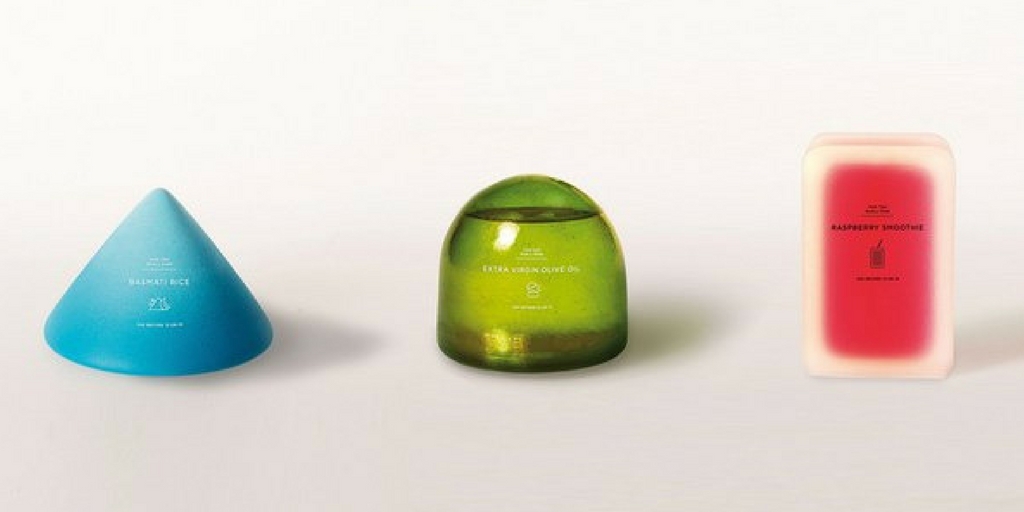
Packaging trends suggest a wide range of startups, researchers, and big companies are committed to finding solutions that match the buzzwords du jour — sustainable, bio-degradable, natural, and eco-friendly.
Here are some sustainability trends in packaging that I think will gain momentum in 2017.
2017 packaging trends to watch
1) Multiple uses
Great packaging protects not only your product, but also your brand. But what if the packaging is part of the product itself?
That is the case with innovations such as the expandable bowl by Swedish design studio Tomorrow Machine. Using 100% bio-based and biodegradable materials, the company created a cellulose wrapper that hugs freeze-dried food and morphs into a bowl when hot water is poured into the spout. The bowl ― a sustainable packaging award winner ― is now in good company, and I expect more will follow.
2) Unconventional materials
Egg shells, fermented sugars, barley, and wheat ribbons — those were the materials used to create, in turn:
- Bio-compostable films: Nano-particles from waste eggshells helped researchers at Tuskegee University in Alabama make a plastic film that is completely sustainable and 700% more flexible than other bio-plastic blends. Film made of the new material could be used in retail packaging, grocery bags and food containers.
- A prototype PHBottle: The European PHBottle project aims to initially create a bottle, cap, and sleeve, although use in other applications (non-food packaging and non-packaging uses) will be tested. The bio-plastic material used to make the bottle comes from the transformation of organic matter found in juice processing by-products.
- Edible six-pack rings for beer: Imagine washing down the six-pack ring with your favorite beer. Although that moment is not quite here yet, the future is looking up for a piece of plastic that is notorious for ensnaring wildlife. The first bio-degradable edible six-pack ring for beer is the result of a partnership between Saltwater Brewery; We Believers, an advertising agency; and Entelequia, Inc., a small startup in Mexico. Made from barley and wheat ribbons spent grain from the brewing process, the rings are safe for wildlife to eat and sturdy enough to support the cans.
3) Reusable packaging
The throw-away culture is not for everyone. In fact, Mintel’s Global Packaging Trends 2017 shows 63% of U.S. consumers actively seek out packages they can re-use. More than half of consumers also say they would prefer to buy foods with minimal or even no packaging. With such great demand for waste reduction, innovation is bound to pick up even more momentum.
What do you think 2017 will bring in terms of sustainable packaging for the electronics industry? Let us know about promising innovations you’ve seen.
This post originally appeared on EBN Online.
Related posts:
by Elizabeth Hines | Sep 7, 2015 | Blog, Strategy, Supply Chain
Multi-channel distribution is likely to fuel the demand for on-demand packaging as companies continue their search for more cost-effective solutions.
Only 7% of companies are making their boxes on demand. However, that figure is set to grow quickly. The explosive rise of e-commerce and all the uncertainties it entails in terms of order fulfillment will likely prompt a growing number of companies, especially those serving multiple sales channels, to seek the answers in on-demand packaging.
The potential savings of always getting the right-sized box at just the right time should speak to all those multi-channel distributors. In a Peerless Research study, distributors were asked to name the areas where fulfillment costs have gone up. The three most popular answers were transportation, labor, and packaging and materials.
A corporate manager at an e-commerce business said about trends in packaging automation, “We are able to consolidate multiple orders from one customer into as few boxes as possible. This saves on time and shipping costs.”
That study talks of the “ripple effect” felt throughout the supply chain as packaging optimization drives down the number of cases on a pallet, as well as storage space requirements and shipping costs, and ultimately has the power to increase a company’s sustainability rating.
In numbers, some of the advantages cited by on-demand packaging proponents include:
- A 28% reduction in the quantity of corrugate
- An 80-90% reduction in filling material
- Savings of 20-35% over conventional supply chains
- A 75% reduction in footprint required by two laborers to pack dunnage, seal, and label a box
Packsize, one of several companies behind the new automated technology, says it actually takes less time to make packaging on demand than going the conventional route of locating and moving packaging purchased from a vendor. Stockouts and obsolete inventory also become relics of the past when boxes can be made minutes before they are needed. In an industry chasing next-day or even same-day delivery, any gain in timely execution counts as a victory.
Though 80% of the 322 top materials handling, logistics, and supply chain managers surveyed by Peerless still purchase and store their corrugated boxes, the trend is pointing in favor of the new solutions. Industry familiarity with on-demand packaging is increasing while the desire for new packaging solutions continues to grow. “We currently have to order in advance custom size boxes for upcoming orders, and it would be better to make them on the fly, adapting to changes,” an engineering manager said. “We are considering some form of on-demand packaging to prevent the storage of cartons,” another said. “We can use the space better.”
It all sounds promising, but is it the way of the future?
Fronetics Strategic Advisors is a leading management consulting firm. Our firm works with companies to identify and execute strategies for growth and value creation.
Whether it is a wholesale food distributor seeking guidance on how to define and execute corporate strategy; a telematics firm needing high quality content on a consistent basis; a real estate firm looking for a marketing partner; or a supply chain firm in need of interim management, our clients rely on Fronetics to help them navigate through critical junctures, meet their toughest challenges, and take advantage of opportunities. We deliver high-impact results.
We advise and work with companies on their most critical issues and opportunities: strategy, marketing, organization, talent acquisition, performance management, and M&A support.
We have deep expertise and a proven track record in a broad range of industries including: supply chain, real estate, software, and logistics.

by Elizabeth Hines | Jan 28, 2014 | Blog, Strategy, Supply Chain
This article was previously published on EBN.
Looking for a way to make your supply chain more efficient? You might want to consider reusable packaging.
Reusable packaging includes pallets, racks, bulk containers, bins, dollies, handheld containers, and dunnage typically made from durable materials such as plastic, wood, and metal. Traditional packaging solutions are designed for one-time use, but reusable packaging can withstand the rigors of the supply chain for five years or more.
Using reusable packaging can make your supply chain more efficient from both an operational and environmental standpoint.
Operationally, reusable packaging can help you reduce overall packaging costs, product damage, labor cost, required warehouse/transport space, costs per trip, energy usage, and the number of trips you make. It can improve workplace efficiency and workplace safety. Studies have found that, on average, reusable packaging generates 29 percent fewer greenhouse gas emissions and 95 percent less solid waste than single-use packaging, and it consumes 39 percent less energy.
Let’s look at a couple of examples that offer lessons for the electronics supply chain.
ANG Newspapers (ANG) in California has the largest daily circulation among newspapers in the East Bay and the third largest in the San Francisco Bay Area. Facing the high costs of wooden pallet breakage and waste removal (wood waste) and seeking to improve its distribution system, ANG made the switch to reusable pallets. The switch has reduced annual labor costs by $46,000 and prevented 37 tons of wood waste per year. Additionally, less space is needed to store pallets, and the company has improved operations and worker safety. It realized a return on investment (ROI) of 125 percent.
Another example: Ghirardelli Chocolate Co. was spending $520,000 a year for 580,000 cardboard boxes for internal distribution. The boxes tended to collapse when they were stacked. This damaged the product and generated $2,700 of disposal costs for soiled cardboard. To reduce packaging costs and cardboard waste and to improve its environmental performance, Ghirardelli invested in reusable totes. The investment will provide the company with a net savings of $1.95 million, eliminate 350 tons of cardboard waste per year, and decrease repetitive stress injuries. What’s more, the company has realized an ROI of 325 percent.
Though reusable packaging is generally better suited for closed-loop systems, it is possible to increase your supply chain efficiency by using reusable packaging and working with third-party poolers.
Want to learn more about reusable packaging? Jerry Welcome, president of the Reusable Packaging Association, wrote an article for Packaging Revolution on how to determine if reusable packaging can boost your profits. Also, the Reusable Packaging Association provides calculators to help companies estimate the environmental and economic differences between one-way and reusable packaging systems.
The US market for returnable transport packaging (RTP) is estimated to exceed $1.1 billion. The Priority Metrics Group projects that the RTP market will grow at a compound annual rate of 6.1 percent over the next few years. By 2017, it expects the global market to reach $6.75 billion.
Reusable packaging may not be right for everyone, but the industry is growing, and the benefits can be large.

by Elizabeth Hines | Jan 27, 2014 | Blog, Manufacturing & Distribution, Marketing, Supply Chain
This post originally appeared on EBN.
For many customers, both current and prospective, you are your packaging. Take the time to do it right.
I recently read a great piece by Zach Williams, founder and creative director of Venveo, on the role of packaging from a marketing perspective.
Williams puts forth the idea that packaging is a critical element to marketing, and therefore, should become the fifth P in marketing (the other four being Product, Pricing, Placement, and Promotion). He makes the point that “packaging embodies so much more than promotion… [it] can make or break how your company is positioned.”
Williams discusses how packaging can create customer experiences. He offers the example of Apple’s packaging and how getting a box with the Apple logo on it creates an emotional response for customers. So emotional is the response that Williams pointed out that there are videos on YouTube of people “unboxing” their new products. When Williams wrote the article in October 2012, there were “thousands” of videos; when I looked today there were close to 3.5 million. That growth alone says a lot. And, the joy and excitement displayed in the videos speaks volumes to Apple, the product, and to the packaging itself.
Another company whose packaging has become iconic in the realm of creating customer experience is Tiffany & Co… New York Times writer Alice Rawsthorn wrote an articleabout the role Tiffany’s packaging played in her decision to purchase a pendant for her goddaughter: “Would I have bought that pendant without the packaging? I’m not sure, but the thought of Delilah opening that duck egg blue box tied with white satin ribbon certainly clinched my choice.”
Williams also notes that packaging can also serve to justify the price of the product and that “packaging should always aim to increase the perceived value of the product.” To Williams’s point, look at both Apple and Tiffany — their prices are higher than their competitors.
The final point in Williams’s article is that the packaging of a company needs to go beyond the physical and extend to the company’s website — that the website “can be considered packaging as well.” The point is a good one, but I think it should go further. I believe packaging should not only include the company’s website, but should also extend to the company’s Facebook and LinkedIn pages, Twitter account, blog, and any outward-facing materials. If your company does not take the time to create an exceptional package for customers, you will be passed over.
Your company’s physical packaging and online packaging speaks volumes about your company. For many customers, current and prospective, you are your packaging. Take the time to do it right.
by Elizabeth Hines | Jan 22, 2014 | Blog, Strategy, Supply Chain
This post was originally published on EBN.
Packaging optimization is critical to supply chain optimization. To catch big advantages, change your mindset and make packaging a forethought rather than an afterthought.
In a Packaging World article, Elisha Tropper, president and CEO of Cambridge Seals Security (CSS), describes how packaging is typically thought of by manufacturers:
An afterthought… for most [manufacturers of industrial products] packaging is not a consideration. They are manufacturers; they are not packagers. They make an industrial product, and industrial products are dropped into boxes. But whether a box is an inch bigger or an inch smaller, what does it matter?
The truth is, it matters a lot. If you want to optimize your supply chain you need to optimize your packaging. This means changing your mindset when it comes to packaging — packaging needs to become an early consideration.
There are several components of packaging. For example, the product itself, the box or container in which the product is placed to sell, and the box or container the items are placed in for shipping. Each of these components are opportunities for optimization.
Package (re)design
A May 2013 industry study by Freedonia forecasts that pallet use in the US will grow 2.4 percent annually to 2.6 billion in 2017. The study also reported that demand for new pallets is expected in increased by 3.5 percent annually to 1.3 billion units.
The International Organization for Standardization sets the standards for pallet size; there are currently six pallet standards. The most common size used in the United States is Grocery Manufacturers pallet, which measures 48 inches by 48 inches. The dimensions of a pallet are not always considered with respect to packaging; this is a costly mistake.
Let’s look at an example previously highlighted in Supply Chain Digest. Adalis (now H.B. Fuller Adhesive Coated Solutions) worked with a telecommunications company to redesign their packaging to optimize pallet use. By reducing the size of each unit package by 1.5 inches in one dimension, the company was able to increase the number of units that could fit on the pallet by 150 percent (from 120 to 300 units). The result was a signification reduction packaging (materials) costs and transportation costs.
Product (re)design
Product design or redesign is another way to optimize packaging to optimize your supply chain.
Let’s go back to Elisha Tropper. Tropper was the former owner of a packaging convert and his packaging consultancy, T3 Associates, acquired CSS in 2010. When Tropper took over at CSS he challenged the company to take packaging optimization into consideration at the point of product design. The company took the challenge and redesigned the product. A significant reduction in package size and materials usage resulted. According to Trooper: “A standard pallet of our boxes can hold about 120,000 seals, while that same pallet will hold only about 80,000 of our competitor’s seals.”
Ikea provides another example, which Colin White outlines in his book Strategic Management. When Ikea first began manufacturing its Bang mug, 864 mugs could fit on a pallet. Ikea redesigned the rim of the mug so as to maximize pallet efficiency — Ikea was able to increase the number of mugs per pallet to 1,280. The company decided it could go further. Another redesign increased the number of mugs per pallet to 2,024. As a result of the product redesign, the company reduced shipping costs by 60 percent.
Outside the box
Ikea has taken packaging optimization for supply chain optimization even further and has created a system called OptiLedge, which eliminates pallet use. Retailers using OptiLedge have realized a savings of been $200 to $300 per container.
Major factors for cost savings include a reduction in man hours to off-load (a savings of between 15 to 23 hours or more of labor per container), space savings (one truckload of OptiLedges would be the equivalent of 23 truckloads of traditional pallets), and weight (OptiLedge weighs under two pounds as compared with the 50 to 75 pounds that a traditional pallet weighs). In addition, OptiLedge eliminates underhang and increases fill rates.
Too often, everyone thinks of packing as the thing that gets thrown away. Smart manufacturers, though, will ensure that good money isn’t tossed out with the box or pallet.